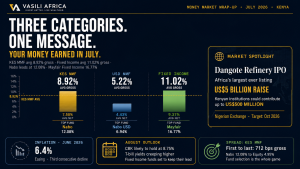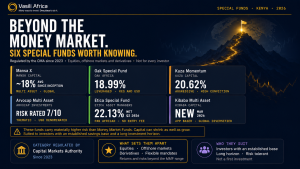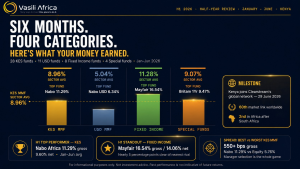
Kenya’s money market is sending a clear message in 2026 as we approach the first half of the year ;the era of effortless double-digit yields is winding down , but the smart money knows exactly where to look. As the Central Bank of Kenya eased its policy rate for the first time in years, returns across the board are adjusting, and yet, several fund managers are holding the line, delivering resilient, above-market performance.
CMA Approves 16 New Investment Funds Across Six Asset Managers
The Capital Markets Authority (CMA) has approved 16 new investment funds spanning six asset management firms, marking a significant expansion of Kenya’s collective investment scheme landscape. The approvals cover a broad range of risk profiles and asset classes from money market and fixed income instruments to multi-asset strategies, private debt, equities, and derivatives.
Pergamon Investment Bank Limited leads the new entrants, securing approval for six sub-funds under the Pergamon Unit Trust Scheme, encompassing Kenya Shilling and Dollar money market strategies alongside equity, fixed income, balanced, and a specialised diversified income fund.
EDC Asset Management (Kenya) Limited enters the market with five sub-funds under the EDC Kenya Unit Trust Funds umbrella, offering exposure across money market, fixed income, dollar income, balanced, and equity strategies.
Capital A Investment Bank Limited received regulatory approval for two additional sub-funds under its existing Capital A Unit Trust.
Faida Investment Bank Limited secured approval for the KETSA Alternative Investment Fund, while Meridian Asset Management Limited enters the market with the Meridian Kenya Shilling Total Return Special Fund.
Nabo Capital Limited rounds out the approvals with the conversion of the Nabo Africa Balanced Fund (USD) into the Nabo Ubuntu Special Fund, which will pursue long-term capital appreciation through dynamic multi-asset allocation across equities, fixed income, derivatives, commodities, currencies and fund-of-funds.
The breadth of these approvals signals continued regulatory confidence in Kenya’s asset management industry and points to growing appetite among investors for diversified, professionally managed investment vehicles. For market participants, the expanded fund universe offers greater choice and the prospect of sharper competition on returns, fees, and product innovation.
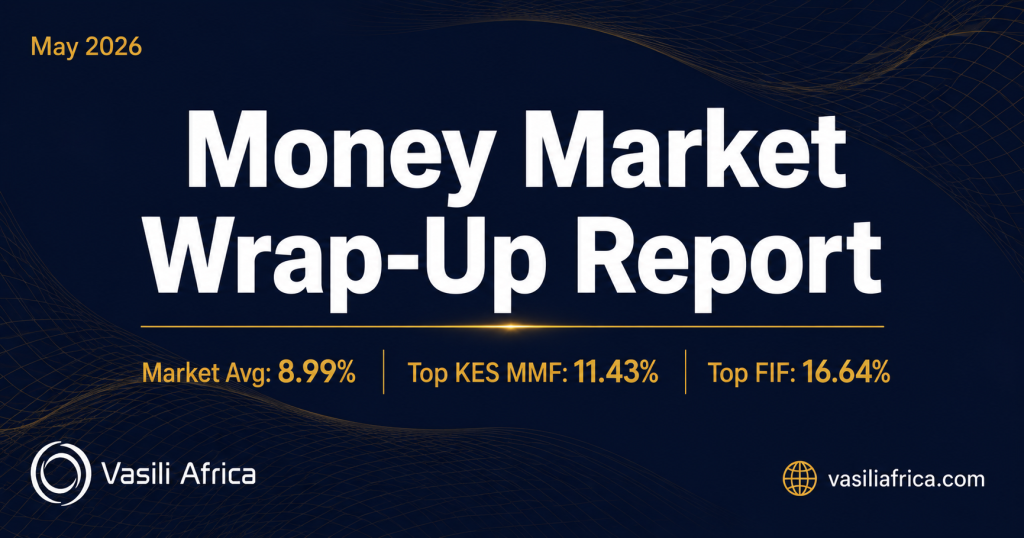
This is May 2026 Money Market Wrap-Up. Just the data, the context, and what it means for an investor’s portfolio.
01. The Macro Backdrop: Rates Ease, Inflation Stirs
The CBK opened 2026 with a rate cut that rattled the money market landscape. The policy rate dropped from 9.0% in January to 8.75% in February which was a deliberate move to stimulate economic activity after a sustained period of elevated borrowing costs. That single decision is the single biggest reason MMF yields are trending downward this year.
Meanwhile, inflation has been on an uneven walk. It eased from 4.4% in January to 4.3% in February, bounced back to 4.4% in March, 5.6% in April and then a more notable jump to 6.68% in May 2026 . The may tick-up was due to the increased fuel prices, which may reflect seasonal cost pressures or early signs of demand recovery. Either way, real returns are getting squeezed from both ends.
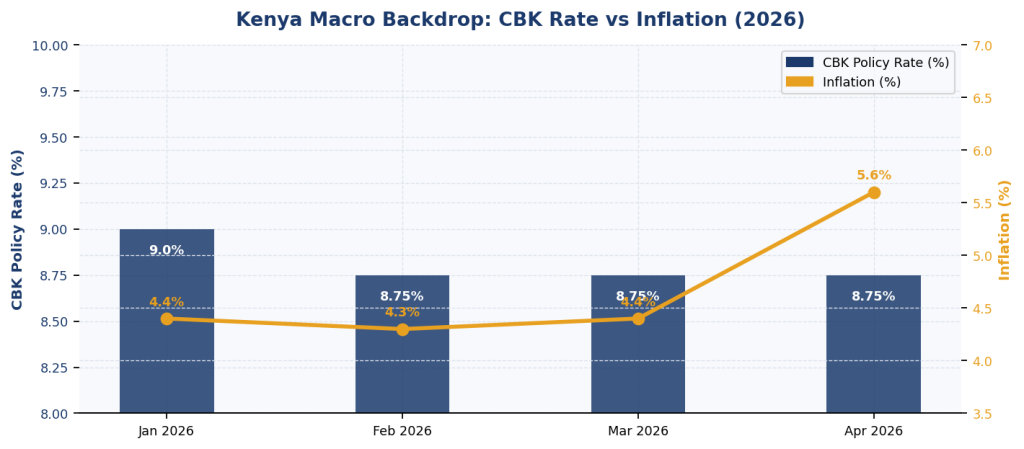
Figure 1: CBK Policy Rate vs. Inflation (Jan–Apr 2026)
The bottom line: Treasury bill yields are on a gradual descent, and most MMFs are expected to dip below the 10% gross mark as the year progresses. But “most” is not “all” and that gap is exactly where opportunity hides.
02. Kenya Shilling MMFs: Who Is Holding the Line?
Across 28 Kenya Shilling Money Market Funds tracked this month, the market average sits at 8.99% gross (7.64% after withholding tax). That figure is respectable , it comfortably outpaces a standard savings account and beats the current inflation rate but the real story is in the top tier, whereby fund managers are putting in work that deserves recognition.
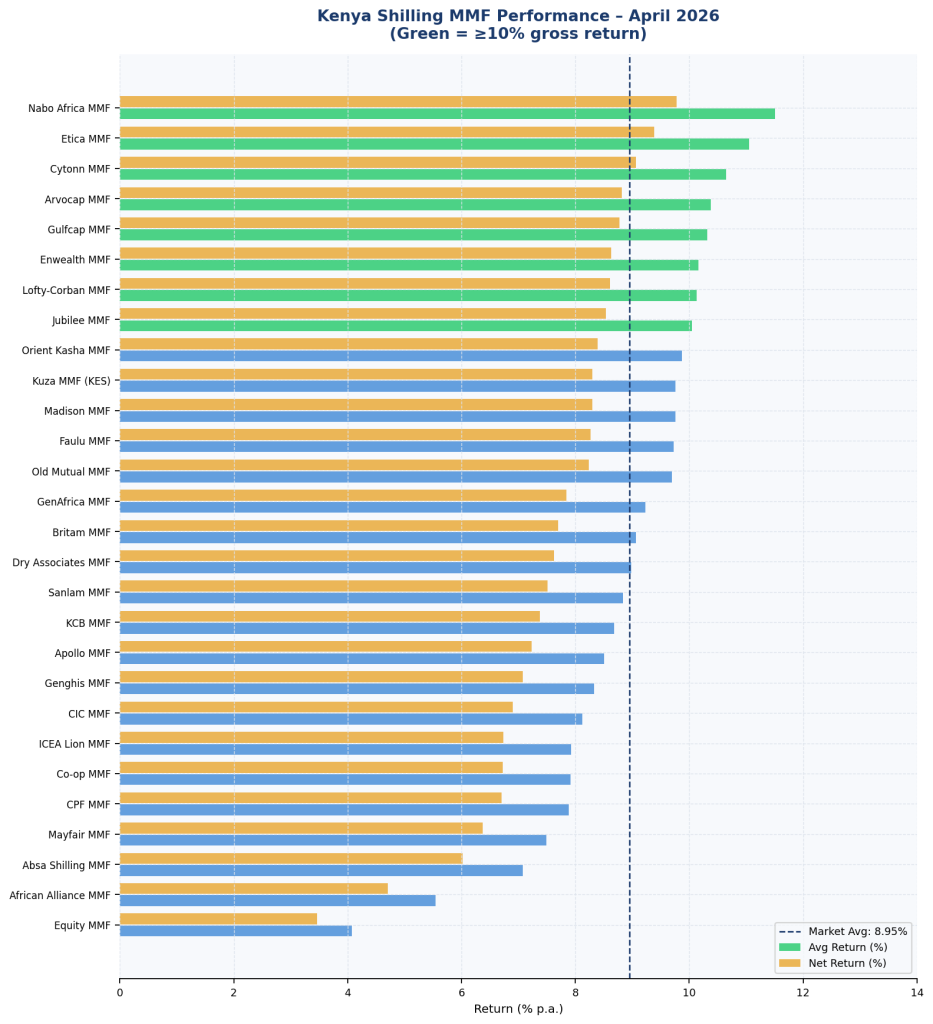
Cytonn Money Market Fund leads the pack with a gross return of 11.43% p.a., netting investors 9.72% after tax, the strongest showing on the board. Cytonn has consistently punched above its weight, and May is no exception.
Nabo Africa Money Market Fund takes second position at 11.34% gross / 9.64% net. Etica money market fund rounds out at 11.10% / 9.44%, followed by Arvocap (10.45% / 8.88%) and Lofty-Corban (10.18% / 8.66%). These five funds form a clear top tier all delivering above-10% gross returns when the market average sits well below that threshold.
| Fund Manager | Fund Name | Avg Return (%) | Net Return (%) |
|---|---|---|---|
| Cytonn Asset Managers | Cytonn MMF | 11.43 | 9.72 |
| Nabo Capital Limited | Nabo Africa Money Market Fund | 11.34 | 9.64 |
| Etica Capital Limited | Etica MMF | 11.10 | 9.44 |
| Arvocap | Arvocap MMF | 10.45 | 8.88 |
| Lofty-Corban | Lofty-Corban MMF | 10.18 | 8.66 |
| Enwealth Financial Services | Enwealth MMF | 10.12 | 8.60 |
| Faulu Microfinance Bank | Faulu MMF | 9.89 | 8.40 |
| Kuza Asset Management | Kuza MMF (KES) | 9.87 | 8.39 |
| Jubilee Financial Services | Jubilee MMF | 9.86 | 8.38 |
| Gulfcap | Gulfcap MMF | 9.84 | 8.37 |
| Madison Investment Managers | Madison MMF | 9.75 | 8.29 |
| Orient Asset Managers | Orient kasha MMF | 9.74 | 8.28 |
| Old Mutual Investment Group | Old Mutual MMF | 9.72 | 8.26 |
| GenAfrica Asset Managers | GenAfrica MMF | 9.40 | 7.99 |
| Britam Asset Managers | Britam MMF | 9.26 | 7.87 |
| Dry Associates | Dry Associates MMF | 8.93 | 7.59 |
| Sanlam Investments EA | Sanlam MMF | 8.89 | 7.55 |
| KCB Group | KCB MMF | 8.76 | 7.44 |
| Apollo Asset Management | Apollo MMF | 8.74 | 7.43 |
| Genghis Capital | Genghis MMF | 8.41 | 7.11 |
| CIC Asset Managers | CIC MMF | 8.12 | 6.90 |
| CPF | CPF MMF | 7.94 | 6.75 |
| Co-op Trust Investment services limited | Co-op MMF | 7.85 | 6.67 |
| ICEA Lion Asset Management | ICEA Lion MMF | 7.69 | 6.54 |
| Mayfair Asset Managers | Mayfair MMF | 7.13 | 6.06 |
| ABSA Bank | Absa Shilling MMF | 7.11 | 6.05 |
| African Alliance | African Alliance MMF | 5.61 | 4.58 |
| Equity Bank | Equity MMF | 4.58 | 3.89 |
| Daily Cumulative Average | 8.99 | 7.64 |
Table 1: KES MMF Returns, May 2026 • Annualised % p.a.
Past performance is not indicative of future returns. This report is for informational purposes only and does not constitute investment advice.
What This Means for Investors
- Liquidity remains a key strength of MMFs. You can exit at short notice without penalties, making them a superior alternative to fixed deposits for short-term funds.
- Stability in a volatile world: while equity markets gyrate, MMFs offer capital preservation with income valuable when macroeconomic signals are mixed.
- Recalibrate your expectations: average returns are trending below 10% gross. If your benchmark was double digits a year ago, now is the time to reassess or consider the top-performing funds and fixed income alternatives.
03. Dollar MMFs: Earning in USD in East Africa
For those holding dollar-denominated savings, the market continues to offer a compelling value proposition: earn in USD, sidestep KES depreciation risk, and still pocket meaningful returns. The sector average lands at 5.12% gross (4.35% net) compared to a standard US bank savings account, and the appeal becomes clear.
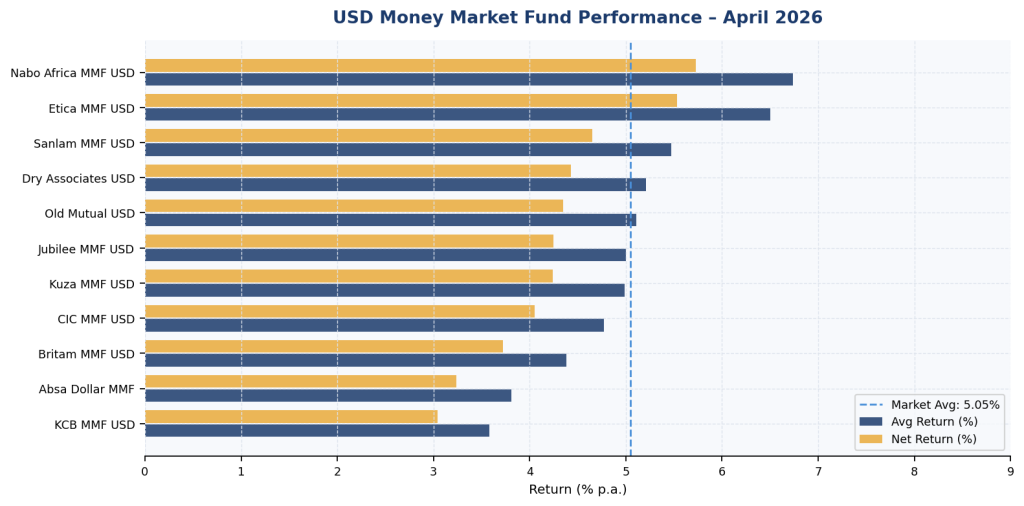
Figure 3: USD MMF Returns — May 2026
Nabo Africa MMF USD dominates again, this time in the dollar segment posting 6.93% gross (5.89% net). Old mutual MMF USD follows closely at 5.72% / 4.86%, while Etica MMF USD (5.68% / 4.83%) and Dry Associates USD (5.60% / 4.76%) complete a solid top four. At the lower end, Britam MMF USD at 4.28% gross is a reminder that fund selection matters as much in the dollar segment as it does in shilling funds.
| Fund Manager | Fund Name | Avg Return (%) | Net Return (%) |
|---|---|---|---|
| Nabo Capital Limited | Nabo Africa MMF USD | 6.93 | 5.89 |
| Old Mutual Investment Group | Old Mutual MMF USD | 5.72 | 4.86 |
| Etica Capital Limited | Etica MMF USD | 5.68 | 4.83 |
| Dry Associates | Dry Associates MMF USD | 5.60 | 4.76 |
| Kuza Asset Management Limited | Kuza MMF USD | 5.03 | 4.27 |
| Sanlam Investments East Africa Limited | Sanlam MMF USD | 5.02 | 4.26 |
| Jubilee Financial Services | Jubilee MMF USD | 4.90 | 4.16 |
| ABSA Bank | Absa Dollar Fund MMF | 4.75 | 4.04 |
| CIC Asset Managers | CIC MMF USD | 4.58 | 3.89 |
| KCB Group | KCB MMF USD | 4.41 | 3.75 |
| Britam Asset Managers (Kenya) Limited | Britam MMF USD | 4.28 | 3.64 |
| Daily Cumulative Average | 5.12 | 4.35 |
Table 2: USD MMF Returns, May 2026 • Annualised % p.a.
Past performance is not indicative of future returns. This report is for informational purposes only and does not constitute investment advice.
04. Fixed Income Funds: Where the Real Alpha Lives
If Money Market Funds are the steady handshake of the investment world, Fixed Income Funds are the firm grip. They carry marginally more risk and suit a slightly longer horizon — but the returns on offer in April 2026 make a compelling case for a closer look.
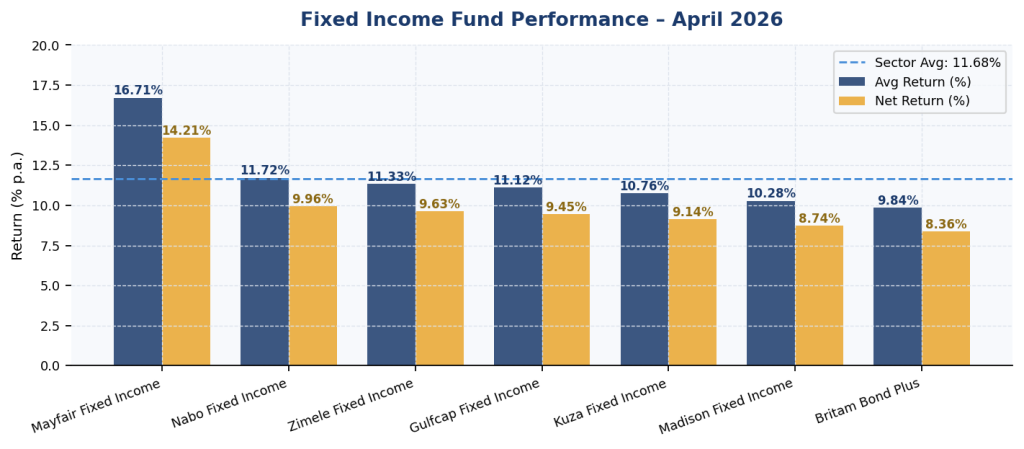
Figure 4: Fixed Income Fund Returns — April 2026
Mayfair Fixed Income Fund has been the standout story of the month and arguably of the year so far. A gross return of 16.64% (14.14% net). That is the result of consistent, deliberate portfolio management over six months, and it places Mayfair in a category entirely its own. If your investment radar has not picked up Mayfair yet, it probably should.
Behind Mayfair, Nabo follows with (12.00% / 10.20%), Zimele (11.22% / 9.53%), Gulfcap (10.08% / 8.57%), Kuza (10.83% / 9.21%), and Madison (10.06% / 8.55%) all deliver net returns deep in the high single digits. Even Britam Bond Plus at 9.81% gross (8.34% net) sits comfortably above the MMF market average.
The sector average of 11.52% gross / 9.79% net is roughly 280 basis points above the MMF market average a meaningful premium that compensates well for the marginally longer lock-in periods these funds typically carry.
| Fund Manager | Fund Name | Avg Return (%) | Net Return (%) |
|---|---|---|---|
| Mayfair Asset Managers | Mayfair Fixed Income Fund | 16.64 | 14.14 |
| Nabo Asset Managers | Nabo Fixed Income Fund | 12.00 | 10.20 |
| Zimele Asset Management | Zimele Fixed Income Fund | 11.22 | 9.53 |
| Kuza Asset Management | Kuza Fixed Income Fund | 10.83 | 9.21 |
| Gulfcap | Gulfcap Fixed Income Fund | 10.08 | 8.57 |
| Madison Asset Managers | Madison Fixed Income Fund | 10.06 | 8.55 |
| Britam Asset Managers | Britam Bond Plus Fund | 9.81 | 8.34 |
| Daily Cumulative Average | 11.52 | 9.79 |
Table 3: Fixed Income Fund Returns, May 2026 • Annualised % p.a.
Past performance is not indicative of future returns. This report is for informational purposes only and does not constitute investment advice.
05. The Takeaway
The rate cycle has turned. That is not an alarm, it is context. Kenya’s MMF market remains one of the most accessible, liquid, and transparent investment categories available to retail investors on the continent. Even at a market average of 8.99% gross, you are earning real returns above inflation, with daily liquidity.
But standing still is not a strategy. The funds at the top of these tables including Cytonn, Nabo, Etica, Mayfair and Zimele are there because of active, deliberate portfolio decisions. If your current fund is sitting in the bottom quartile, it is worth asking why.
Use this report as a starting point. Do your due diligence. Ask your fund manager the hard questions. And if you are ready to explore where these instruments fit in your overall portfolio, take the next step today.
06. Looking Ahead: What June 2026 Could Bring
Forecasting is a dangerous business especially in a market shaped by central bank decisions, geopolitical tremors, and the unpredictable mood of global commodity prices. But informed speculation, grounded in the data we actually have, is not just useful. It is necessary. Here is our read of where May 2026 is headed, and what it means for your money.
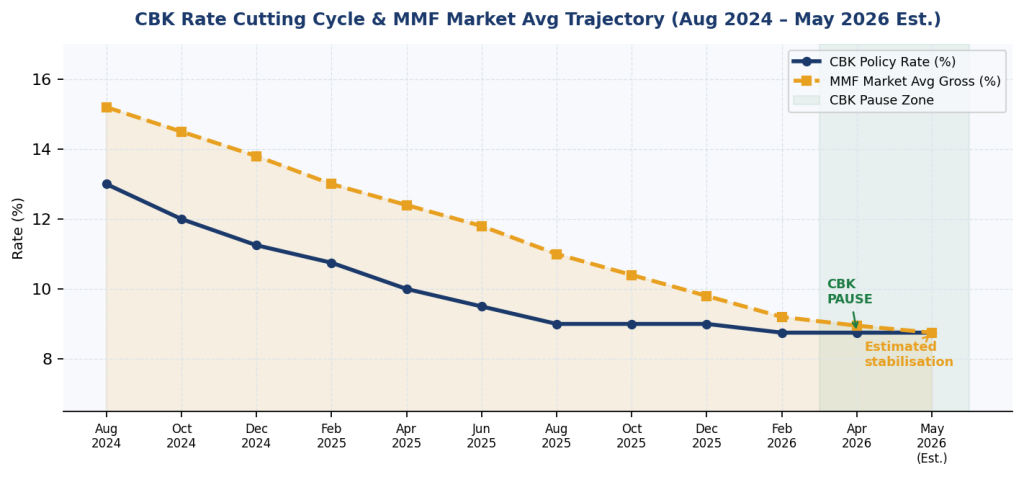
Figure 5: CBK Rate Cutting Cycle & MMF Market Avg Trajectory (Aug 2024 – May 2026 Est.)
The CBK Has Hit Pause And That Is Actually Good News
Here is a fact worth sitting with: the CBK has cut rates ten consecutive times since August 2024, slashing 425 basis points off the policy rate in the span of roughly 18 months. On April 8, 2026, it stopped. The Monetary Policy Committee held the rate at 8.75%, citing the need to keep inflation expectations anchored and the exchange rate stable.
The pause matters for MMF investors for a straightforward reason: when rates stop falling, yields stop falling too. The relentless compression of returns that characterized late 2024 through early 2026 has likely run its course at least for the next few months. Do not expect a rebound to 12% or 13% territory. But the floor may be closer than it appears.
With the 91-day T-bill currently yielding 7.56% and the 364-day bill at 8.48%, the underlying instruments that MMFs invest in are already pricing in stability. Expect most MMF gross returns to consolidate in the 8.5%–9.5% band through May. The top performers, those with the flexibility to access commercial paper and higher-yield placements may still hold above 10%.
The May Inflation Surprise: A Red Flag That Cannot Be Ignored
May’s inflation print of 6.68% is a sharp jump from April’s 5.6% and well above expectations heading into June. This is not a yellow flag; it is a clear signal that price pressures are building. The surge is driven by food and fuel costs, and the committee faces a difficult balancing act: cut further and risk entrenching inflation, or hold and accept slower growth.
With May inflation confirmed at 6.68%, real returns have turned genuinely thin for many investors. At the May market average net return of around 7.61% against 6.68% inflation, you are netting less than 1% in real terms. That is still positive but only just. Funds in the bottom half of the performance table are delivering negative real returns to their investors. The June MPC meeting will be critical: any signal of a rate reversal would be highly yield-supportive for MMF investors. For now, the watchword is vigilance.
The June opportunity: if inflation remains elevated above 6%, the CBK is almost certain to hold rates or even signal a tightening bias. That would be positive for MMF yields, as it would reduce further downward pressure on T-bill rates. A central bank forced to defend price stability is a friend to fixed-income investors. Watch the June 11 MPC meeting closely.
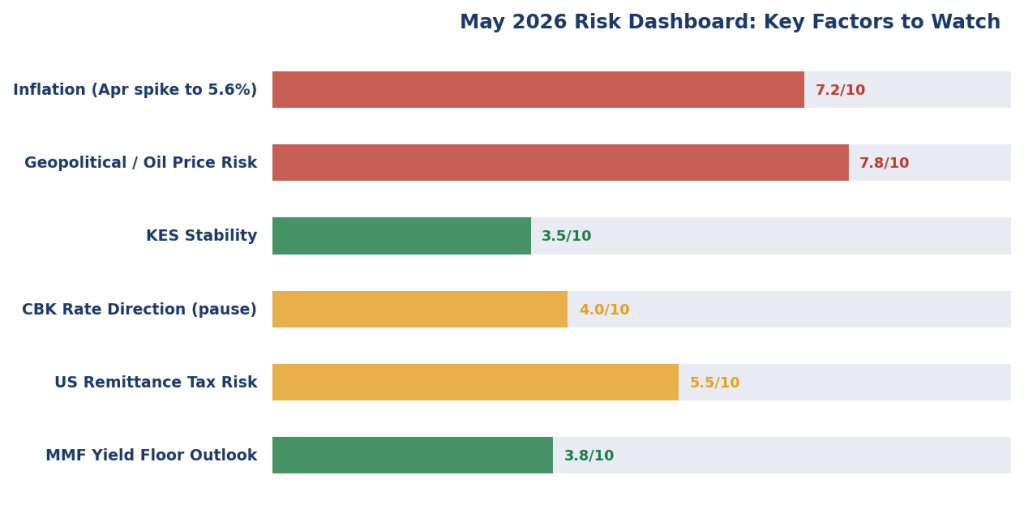
Figure 6: May 2026 Risk Dashboard — Key Factors to Watch (10 = Highest Risk/Impact)
The Shilling: A Quiet Strength Worth Monitoring
The Kenya Shilling closed April 2026 at around KES 129.2 to the USD, firm, backed by record foreign exchange reserves of USD 10.9 billion (4.9 months of import cover) and strong diaspora remittances up 8.8% year-to-date. That stability has been the unsung hero of the low-inflation environment.
One risk worth tracking in May: the proposed 3.5% US remittance tax. If enacted, it would directly reduce the flow of dollars into Kenya from the diaspora — one of the key pillars keeping the shilling stable. For Dollar MMF investors, this is not a reason to panic, but it is a reason to stay informed. A weaker shilling would widen the return differential between KES and USD funds in favour of the dollar.
Fixed Income Funds: The June Opportunity
If there is one call to make heading into June, it is this: the case for Fixed Income Funds is strengthening. As MMF yields compress and the CBK pauses, the spread between the two categories already at roughly 280 basis points is likely to hold or even widen slightly. Mayfair’s 16.64% gross return was not an accident; it reflects active duration management in a falling-rate environment, locking in higher yields on longer-dated paper before the window closed.
In May, that window is not fully shut. Investors who have been sitting in MMFs and watching fixed income from the sidelines may find May to be a practical entry point. The sector average of 11.52% gross (9.79% net) is delivering nearly 230 basis points of additional net return above the MMF average and given the CBK pause, that premium is unlikely to erode quickly.
Three Scenarios for June 2026
| Scenario | Conditions | MMF Outlook |
| Base Case (Most Likely) | CBK holds at 8.75%. Inflation stabilises around 6.0%–6.5%. KES holds around 129-131. T-bills consolidate near current levels. | KES MMF average holds 8.7%–9.0% gross. Top funds stay above 10%. Fixed income continues to outperform. Real returns remain thin but positive for top-tier funds. |
| Bull Case | Inflation retreats sharply below 5.5%. Global oil prices ease. CBK signals rate stability; government domestic borrowing rises, pushing bond yields higher. | MMF top tier reclaims 10.5%+ gross. Fixed income sector avg nudges toward 13%+. Real returns turn positive for most investors. Strong month for yield seekers. |
| Bear Case | Inflation surges above 7.5%. CBK was forced to consider a rate hike. KES weakens past 133 on capital outflows. Global risk-off sentiment hits emerging markets. | KES MMF avg dips toward 8.3% gross. Real returns go negative for lower-tier funds, net yields below inflation. USD funds become a clear safe haven. |
Table 4: June 2026 Scenario Analysis • Speculative. Based on current macro trajectory and historical patterns.
The Bottom Line for June
- Yields are likely to stabilise, not collapse. The CBK pause removes the biggest downward pressure that has defined the past 18 months. June is unlikely to see further yield compression unless a surprise rate cut materialises.
- The May inflation surprise at 6.68% is the single most important number heading into June. Real MMF returns are now below 1% for average funds. Watch the June CPI release and the MPC meeting closely, both will set the tone for the second half of 2026.
- Fixed income is the June play for yield-seekers. With real MMF returns razor-thin against 6.68% inflation, the incremental return from Fixed Income funds nearly 230 bps net above the MMF average is the clearest opportunity on the board for investors willing to extend their horizon slightly.
- Dollar MMF holders should watch the US remittance tax debate closely in June. The KES has held firm but inflation is eroding real KES returns fast. Holding USD-denominated exposure is no longer just a hedge, it is increasingly a strategic position.
- Fund selection has never mattered more. In a market where the spread between the best and worst performing fund exceeds 700 basis points gross, and inflation is running at 6.68%, which fund you are in is the difference between a positive and negative real return.
Data sourced from daily fund performance disclosures as published in Kenyan daily newspapers. Macro data sourced from CBK, Trading Economics, and Sanlam Investments East Africa. Tracking methodology: daily effective annualised returns.
Forward-looking statements are speculative and based on current macro trajectory. Past performance is not a guide to future returns. Consult Vasili Africa before making any investment decision.